Artificial Intelligence Effect on Jobs
Introduction: How AI Is Redefining the World of Work
You’ve probably noticed how fast artificial intelligence (AI) is changing everything—from how you search on Google to how companies hire, produce, and serve customers. But what does this mean for your job? Or your future career?
This article explores the real impact of Artificial Intelligence on jobs—not just the fear-driven headlines or the hype. You’ll understand which roles are being automated, which are growing, and most importantly, how you can adapt and stay valuable in an AI-driven world.
We’ll explore data, expert insights, and practical tips so you can prepare for the next decade of work—no matter your current industry or skill level.
What Is Artificial Intelligence? (And Why It’s Everywhere Now)
Before we talk about jobs, let’s get clear on what AI actually means.
Artificial Intelligence (AI) is the ability of computers and machines to perform tasks that normally require human intelligence. These include learning, problem-solving, decision-making, and even creativity.
In simple terms:
AI helps machines “think” and “learn” like humans—just much faster and with massive amounts of data.
Examples of AI in Everyday Life
You probably use AI more often than you realize:
- Google’s search algorithm that predicts your queries
- Netflix recommending movies based on your taste
- Siri, Alexa, or ChatGPT answering your questions
- Online stores suggesting products you might like
- Banks detecting fraud through smart algorithms
AI isn’t just about robots—it’s about software that learns and improves over time. This ability to learn and adapt is what’s transforming how companies work and how people get hired.
Why Artificial Intelligence Matters in Today’s Job Market
AI isn’t just a tech buzzword anymore—it’s a core part of business strategy across every industry.
From healthcare to logistics, from marketing to manufacturing, organizations are using AI to save time, reduce costs, and improve decisions. And that’s creating both opportunities and challenges for workers.
AI Is Reshaping Industries, Not Just Replacing Jobs
Let’s be clear: AI doesn’t always “take” jobs—it often changes them. According to a 2023 report by the World Economic Forum, AI could disrupt 85 million jobs globally by 2025—but it’s also expected to create 97 million new roles.
That means AI is transforming work, not eliminating it.
Here’s how different sectors are being affected:
Industry | How AI Is Changing It | Example |
Automates diagnostics, analyzes medical data | AI reads X-rays faster than doctors | |
Finance | Detects fraud, predicts market trends | AI trading algorithms |
Retail | Personalizes shopping experiences | AI-driven recommendation engines |
Manufacturing | Predicts equipment failures | Predictive maintenance |
Education | Enables adaptive learning | AI tutors and grading tools |
Transportation | Improves safety and logistics | Self-driving systems |
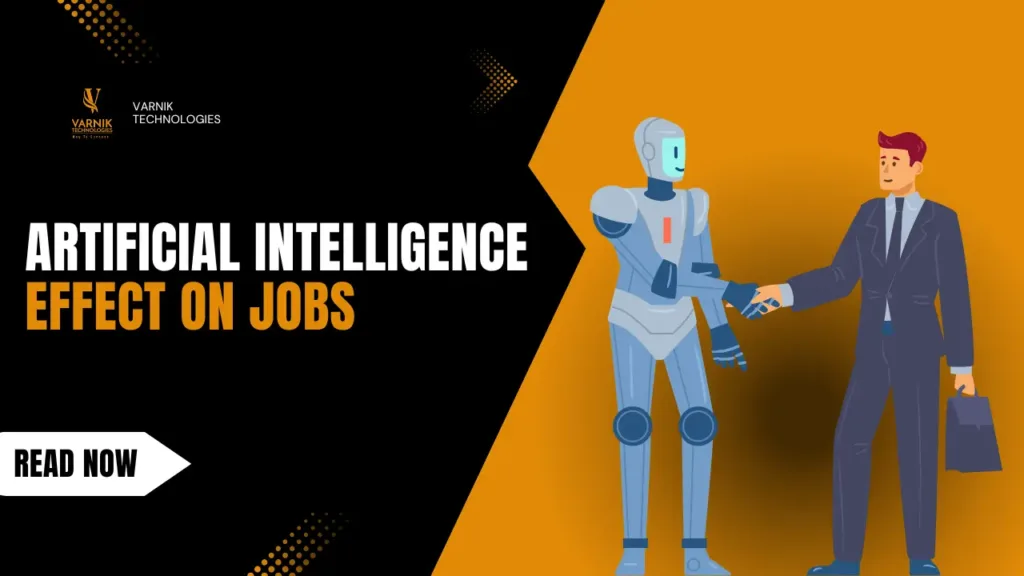
AI is becoming a co-worker, not just a tool. It helps humans focus on creative, strategic, and emotionally intelligent work—skills machines can’t easily replicate.
How Artificial Intelligence Is Affecting Jobs Right Now
Let’s look closer at the specific effects AI is having on jobs in the present moment.
1. Automation of Repetitive Tasks
Many routine and predictable jobs are now being automated. For example:
- Data entry clerks
- Call center agents
- Factory line workers
- Basic accounting or bookkeeping tasks
McKinsey estimates that about 30% of tasks in 60% of all jobs could be automated with existing AI technology. That doesn’t mean all those jobs disappear—but workers will need to shift toward more complex, value-driven work.
2. Rising Demand for Technical and Analytical Roles
While some jobs decline, new roles are emerging:
- AI engineers and machine learning specialists
- Data analysts and data scientists
- AI ethicists (people ensuring AI is used responsibly)
- Automation consultants helping businesses adapt
In fact, LinkedIn’s “Jobs on the Rise” report shows that AI-related skills are among the fastest-growing skill sets in 2024 and beyond.
3. The Human Advantage: Creativity, Empathy, and Strategy
AI may be brilliant with numbers, but it can’t replace human creativity, judgment, or emotional intelligence.
Jobs involving:
- Creativity (marketing, writing, design)
- Strategy (management, business development)
- People skills (counseling, teaching, healthcare)
are becoming even more valuable. These rely on empathy, intuition, and ethics—qualities AI can’t replicate.
4. The Skill Shift Is Real
Workers now need to reskill or upskill faster than ever. The World Economic Forum predicts that half of all employees will need new skills by 2027 due to automation and AI integration.
In other words, continuous learning is no longer optional—it’s your career insurance in an AI-driven world.
The Two Sides of AI’s Job Impact
It’s easy to see AI as either a threat or a miracle. In reality, it’s both—depending on how you respond to it.
Let’s look at both perspectives.
The Positive Side: AI as a Career Accelerator
- Increased productivity: AI handles repetitive work, freeing humans for higher-value tasks.
- New job creation: AI development, ethics, and maintenance roles are expanding rapidly.
- Better work-life balance: Automation can reduce burnout and improve efficiency.
- Career growth: Professionals who learn to use AI tools can command higher salaries.
For example, marketing professionals who master AI-powered analytics and personalization tools are seeing 30–40% higher productivity and faster promotions.
- Increased productivity: AI handles repetitive work, freeing humans for higher-value tasks.
The Negative Side: Job Displacement and Inequality
- Low-skill jobs are at higher risk of automation.
- Digital skill gaps are widening between those who can use AI and those who can’t.
- Ethical challenges such as bias and data misuse are creating new risks.
The OECD (Organisation for Economic Co-operation and Development) estimates that 14% of jobs are highly automatable, while 32% could face significant change in how they’re performed.
But here’s the good news: history shows that every major technological revolution—from the Industrial Age to the Internet Age—has created more jobs than it destroyed in the long run
A Closer Look: Jobs at Risk vs. Jobs on the Rise
Understanding which roles are changing can help you plan your next move wisely.
Jobs Most at Risk
- Administrative roles (data entry, payroll, clerical work)
- Retail cashiers (self-checkout and AI POS systems)
- Customer service reps (AI chatbots handling queries)
- Basic accounting roles (automated bookkeeping tools)
- Manufacturing operators (robotic assembly lines)
Jobs on the Rise
- AI and Machine Learning Specialists
- Data Scientists and Analysts
- AI Trainers and Prompt Engineers
- Cybersecurity Experts
- Digital Marketing Strategists
- Human-AI Collaboration Designers
- Healthcare Technologists
Notice something? The jobs that are growing all involve working with AI, not against it. The key is to learn how to leverage AI to enhance your work—not fear it.
Real-World Example: AI in Customer Support
Let’s make this real.
A global e-commerce company introduced AI chatbots to handle basic customer queries. Many feared this would cut human jobs. Instead, the company:
- Automated 60% of repetitive inquiries
- Retrained existing staff as “AI supervisors” to handle complex cases
- Increased customer satisfaction scores by 20%
Result? Fewer boring tasks, happier customers, and more strategic roles for employees.
This shows that AI can actually enhance jobs when used wisely.
How Artificial Intelligence Is Creating New Career Opportunities
While much of the conversation around AI focuses on jobs being replaced, the truth is more balanced. Artificial intelligence is also creating a surge of new opportunities that didn’t exist even five years ago.
Just as the internet created social media managers, web developers, and cybersecurity analysts, AI is now giving rise to an entirely new generation of professions.
Let’s look at the most promising areas where AI is creating growth.
1. AI and Machine Learning Engineering
AI engineers design and build the algorithms that power intelligent systems. These roles involve creating machine learning models, training data sets, and improving how machines “learn.”
Example roles:
- Machine Learning Engineer
- AI Software Developer
- NLP (Natural Language Processing) Engineer
Typical skills needed:
- Python, TensorFlow, PyTorch
- Data science fundamentals
- Model evaluation and optimization
According to LinkedIn’s Emerging Jobs Report, AI Engineer roles have grown by over 70% annually in recent years. Demand far exceeds supply, which means this field offers some of the best salaries and career stability.
2. Data Science and Analytics
AI runs on data — lots of it. Every company, from small startups to global corporations, now relies on data-driven decisions. That means the people who can analyze, clean, and interpret data are in very high demand.
Example roles:
- Data Analyst
- Data Scientist
- Data Visualization Specialist
Why it matters:
AI tools are only as good as the data they use. Professionals who can collect, prepare, and interpret that data are essential to every organization’s AI strategy.
Case in point:
A 2024 Deloitte survey found that 63% of companies identified “data talent shortages” as their biggest challenge in adopting AI.
3. AI Ethics and Governance
As AI grows, so do ethical challenges — bias in algorithms, privacy concerns, and decision transparency. That’s why companies are hiring AI ethics officers and governance experts to ensure AI is used responsibly.
Example roles:
- AI Ethics Consultant
- Data Governance Manager
- Responsible AI Policy Advisor
These roles combine technical understanding with philosophical, legal, and social insight. They help businesses ensure AI is fair, transparent, and aligned with human values.
4. AI Integration and Automation Specialists
Not every business builds AI from scratch. Many integrate AI tools into existing workflows. That’s where automation experts come in. They help companies identify repetitive processes that AI can handle and implement solutions effectively.
Example roles:
- Automation Specialist
- AI Workflow Consultant
- Process Optimization Analyst
Example in practice:
A logistics company may hire automation specialists to design AI systems that optimize delivery routes, cutting costs by up to 20%.
5. Human-AI Collaboration and Support Roles
AI doesn’t replace humans — it works alongside them. That’s creating new jobs where humans guide, train, and oversee AI systems.
Example roles:
- AI Trainer (teaches AI systems how to interpret data)
- Prompt Engineer (writes and refines inputs for AI models)
- AI Content Supervisor (ensures AI-generated content meets quality standards)
In action:
A publishing firm may employ prompt engineers to fine-tune AI writing tools so that their tone matches brand guidelines. These are hybrid human-AI roles — combining creativity with technical awareness.
6. Cybersecurity and AI Risk Management
AI can protect systems, but it can also create new vulnerabilities. As a result, cybersecurity experts who understand AI-driven threats are in growing demand.
Roles include:
- AI Security Engineer
- Data Privacy Officer
- Cyber Threat Analyst
Industry example:
Banks are now using AI to detect fraud in real time — but they also need specialists who can protect those same systems from cyberattacks.
7. Creative and Marketing Professions Enhanced by AI
Creative industries are also seeing transformation rather than elimination. Writers, designers, filmmakers, and marketers are now using AI to speed up workflows and enhance creativity.
AI-powered creativity looks like this:
- Marketers using predictive analytics to personalize campaigns
- Designers using AI to test multiple design layouts instantly
- Copywriters using AI to generate ideas, not full articles
Real-world example:
A marketing agency using AI-driven insights to craft personalized ad campaigns can increase engagement by up to 35%, according to HubSpot’s 2024 data.
These roles are still human at their core — AI is just an enhancer.
The Skill Revolution: What You Need to Stay Employable
With all these changes, the question becomes: How do you prepare yourself for the AI economy?
The answer lies in combining technical literacy with timeless human skills.
Let’s break that down.
1. Learn How AI Works (Even If You’re Not a Tech Expert)
You don’t have to be a programmer to understand AI. But you do need to understand what AI can and can’t do.
Start by learning the basics of:
- How machine learning models use data
- What “training” an AI model means
- Where AI tends to make mistakes
Practical tip:
Take an introductory course on AI fundamentals. Platforms like Coursera, Udemy, and Google AI offer free and beginner-friendly courses.
Understanding the logic behind AI makes you more adaptable, no matter your role.
2. Develop Digital Fluency
AI is part of a larger digital ecosystem that includes cloud computing, automation, and data science. You need to be comfortable working with these tools.
Essential digital skills for the AI era include:
- Data analysis and visualization
- Understanding cloud-based tools
- Using AI assistants productively (e.g., ChatGPT, Jasper, Midjourney)
Workers who can combine digital literacy with domain expertise will be the most valuable employees in the next decade.
3. Build Human-Centric Skills
While machines learn fast, they still lack empathy, intuition, and ethics. That’s why human skills are your strongest asset in the age of AI.
Top in-demand soft skills include:
- Critical thinking and problem-solving
- Communication and storytelling
- Leadership and adaptability
- Creativity and emotional intelligence
According to the World Economic Forum’s “Future of Jobs Report,” these will be the most in-demand skills through 2030.
4. Practice Lifelong Learning
The half-life of technical knowledge is shrinking fast. What you learn today might be outdated in five years. That’s why continuous learning is essential.
Here’s how to stay ahead:
- Dedicate one hour per week to learning something new
- Follow AI trends on reputable platforms (e.g., MIT Technology Review, Forbes AI, WEF)
- Attend webinars and online communities in your industry
The professionals who thrive in the AI era will be those who never stop learning.
Real-World Case Studies: AI Creating, Not Taking, Jobs
Let’s explore a few real examples of how AI is enhancing, not replacing, human work.
Case Study 1: AI in Healthcare
AI systems now help doctors detect diseases earlier through image recognition and data analysis. But instead of replacing doctors, these tools empower them to make faster, more accurate decisions.
Impact:
- Radiologists use AI to scan X-rays in seconds
- Doctors focus more on patient care and treatment planning
- Hospitals save time, reduce errors, and increase efficiency
According to the American Medical Association, AI-assisted diagnostics improve accuracy rates by up to 15%, while still requiring human oversight.
Case Study 2: AI in Education
AI tutors and personalized learning systems are reshaping classrooms. But instead of replacing teachers, they help them customize lessons to each student’s pace.
Impact:
- Teachers spend less time grading and more time mentoring
- Students get real-time feedback
- Education becomes more inclusive and personalized
Teachers who learn to use these systems become more effective and valued in their roles.
Case Study 3: AI in Manufacturing
AI-powered robots and predictive maintenance systems have increased productivity while reducing workplace accidents.
Impact:
- Machines handle repetitive, dangerous tasks
- Human workers shift to supervision and problem-solving roles
- Production downtime drops significantly
Factories using AI-driven predictive maintenance report up to 25% cost savings and fewer safety incidents.
Case Study 4: AI in Marketing and Content Creation
AI is changing how marketing teams work. Instead of writing every ad or campaign manually, teams now use AI to analyze data, predict trends, and test content faster.
Impact:
- Content marketers use AI to test messaging variations
- Social media teams use AI to time posts for maximum engagement
- Human creativity remains the driving force behind brand storytelling
The outcome: faster campaigns, better targeting, and more effective results — all with fewer resources.
The Future of Work in the Age of Artificial Intelligence
By now, it’s clear that artificial intelligence is not just another passing trend. It’s a structural change in how economies, industries, and people function. The question isn’t whether AI will affect jobs — it already has. The question is how we adapt to it.
Over the next decade, AI will reshape nearly every career path. But the nature of that change will depend on how well governments, companies, and individuals prepare.
Let’s explore what the future of work might look like in the AI era — and what you can do today to secure your place in it.
How AI Will Transform Work by 2030
The coming years will likely bring more collaboration between humans and machines, rather than full automation. AI will act as an assistant, advisor, and enhancer — not a replacement.
Here’s what leading research predicts:
- McKinsey projects that up to 50% of today’s work activities could be automated by 2030, but less than 10% of jobs will be completely replaced.
- The World Economic Forum expects that AI will add $15.7 trillion to the global economy by 2030, mainly through productivity gains.
- PwC predicts that AI adoption could create millions of new jobs in areas like technology, education, and healthcare.
These forecasts show a consistent theme: while AI will transform every industry, human expertise will remain at the center. The ability to work alongside AI will define professional success.
What Jobs Will Look Like in an AI-Driven Economy
Imagine your workday five or ten years from now. It’s likely you’ll be working with AI tools built into your everyday workflow.
- Marketers will use predictive analytics to test campaign ideas before launching them.
- Teachers will use AI assistants to track student progress and customize lessons.
- Engineers will collaborate with AI design systems to prototype and test models instantly.
- Customer support professionals will supervise smart chat systems that handle basic inquiries while they focus on complex cases.
AI will become invisible — integrated into every tool and process you use. The goal isn’t to replace you; it’s to help you focus on what humans do best: thinking critically, building relationships, and making strategic decisions.
The Shift from Jobs to Skills
One of the biggest transformations AI will bring is a move from job-based economies to skill-based economies.
Traditionally, careers were defined by job titles. In the future, they’ll be defined by skill portfolios.
Employers will care less about your degree and more about what you can actually do. That’s already happening in leading tech companies, where practical experience and problem-solving ability outweigh formal education.
The new skill economy focuses on:
- Adaptability — the ability to learn new tools quickly
- Analytical thinking — using data to make smart decisions
- Creativity — generating fresh ideas that AI can’t replicate
- Collaboration — blending human and machine strengths effectively
People who constantly upgrade their skills will find new opportunities, while those who resist change may struggle to stay relevant.
The Ethical Challenge of Artificial Intelligence
AI is powerful, but it also raises complex ethical questions that affect employment, fairness, and privacy.
As AI systems make more decisions — from hiring candidates to approving loans — bias and discrimination can slip in if the data they’re trained on is flawed.
For example:
- Recruitment algorithms can favor certain demographics if trained on biased historical data.
- AI credit scoring systems may unintentionally disadvantage low-income applicants.
- Surveillance-based AI tools could threaten personal privacy in workplaces.
That’s why AI ethics is now one of the most critical disciplines of the decade. Organizations need clear frameworks to ensure that AI supports fairness, transparency, and accountability.
Core principles of ethical AI:
- Transparency – AI decisions must be explainable and open to review.
- Accountability – Companies must take responsibility for the outcomes of AI systems.
- Privacy Protection – Employee and consumer data must be handled with care and consent.
- Fairness – AI models must be tested and audited for bias.
Governments and corporations are starting to act. The European Union’s AI Act and similar laws worldwide aim to ensure AI technologies are used safely and ethically.
The future of work will depend not only on technological progress but also on how responsibly we choose to use that progress.
How Individuals Can Adapt and Thrive
AI doesn’t eliminate opportunity; it shifts where opportunity lies. To stay employable and valuable, you need a clear plan for adapting, learning, and leading.
Here’s a practical roadmap.
1. Adopt a Growth Mindset
See AI not as a competitor but as a tool for growth. Instead of asking, “Will AI take my job?” ask, “How can I use AI to make my job easier or more valuable?”
People who approach AI with curiosity instead of fear are the ones who advance the fastest.
2. Upgrade Your Skills Strategically
Focus on learning skills that complement AI rather than compete with it.
For example:
- Learn to interpret AI-generated insights instead of manually gathering data.
- Develop communication and leadership skills to manage AI-powered teams.
- Stay informed about the latest AI tools in your industry.
Continuous education, certifications, and micro-learning programs will keep your skill set sharp.
3. Build a Personal Brand in the AI Era
As AI automates routine tasks, your unique perspective becomes your biggest strength.
Build a professional presence that highlights:
- Your ability to use AI tools effectively
- Your creative and analytical problem-solving abilities
- Your track record of adapting to new technology
A strong personal brand will help you stand out in a market where technical skills are widespread but strategic thinking is rare.
4. Leverage AI for Productivity
Use AI to save time and focus on what matters. Whether you’re in marketing, law, design, or healthcare, there are AI assistants that can handle repetitive work.
Learning how to integrate these tools into your daily workflow can make you twice as productive — and more valuable to employers.
How Businesses Can Use AI Responsibly for Growth
For companies, the challenge isn’t whether to adopt AI, but how to do it in a way that supports both profit and people.
Businesses that rush to automate without considering employees risk losing trust, creativity, and long-term talent. Successful organizations use AI to enhance their workforce, not replace it.
Best practices for responsible AI adoption:
- Communicate openly – Explain how AI tools are used and what changes employees can expect.
- Invest in training – Equip workers with skills to manage and collaborate with AI systems.
- Prioritize ethics – Build clear AI policies that prevent misuse and bias.
- Measure impact – Track productivity, satisfaction, and fairness to ensure AI adds real value.
- Encourage innovation – Allow teams to experiment with AI tools and share best practices.
When companies use AI responsibly, they see higher engagement, improved efficiency, and stronger brand reputation.
The Long-Term Vision: A Human-Centered AI Economy
The most successful future isn’t one where machines replace people — it’s one where humans and AI work together to create more value.
In this vision:
- AI handles repetitive and data-heavy tasks.
- Humans focus on creativity, relationships, and strategy.
- Work becomes more flexible, meaningful, and productive.
This shift can lead to shorter workweeks, higher job satisfaction, and new forms of entrepreneurship. AI may even create new industries we can’t yet imagine — just as the internet created social media, e-commerce, and app development.
But realizing this vision requires balance. We must ensure that AI progress benefits everyone, not just a few. That means investing in education, digital inclusion, and ethical governance at every level.
Conclusion: Shaping Your Future in the AI Era
Artificial intelligence will continue to redefine the way we live and work. Some jobs will fade, many will evolve, and countless new ones will emerge. The future belongs to those who are ready to adapt, learn, and lead through this transformation.
Here’s what to remember:
- AI is not here to replace you — it’s here to assist you.
- Your most valuable skills will always be human: creativity, judgment, empathy, and ethics.
- Continuous learning is the foundation of long-term success.
- Businesses that use AI responsibly will unlock greater innovation and trust.
If you start building your AI knowledge and adaptability now, you won’t just survive the AI revolution — you’ll thrive in it. The next decade of work will belong to those who combine human intelligence with artificial intelligence to create something greater than either could achieve alone.
FAQs: Artificial Intelligence Effect on Jobs
1. How is artificial intelligence affecting jobs today?
Artificial intelligence is automating repetitive tasks across industries such as manufacturing, finance, and customer service. While some routine roles are being reduced, AI is also creating new opportunities in data science, machine learning, and AI system management. Instead of replacing humans, AI is reshaping how we work and the kinds of skills employers need.
2. Will AI replace human jobs completely?
No. AI will not replace all human jobs, but it will transform them. Most experts agree that AI will automate certain tasks within jobs, not entire roles. Jobs requiring creativity, emotional intelligence, and complex decision-making will remain in human hands, while AI will handle repetitive, data-driven work.
3. What types of jobs are most at risk from artificial intelligence?
The jobs most at risk are those with predictable, repetitive tasks. These include data entry clerks, call center operators, retail cashiers, and basic accounting roles. However, these jobs are evolving — people who learn to use AI tools to enhance productivity can often transition into higher-value roles within the same field.
4. What new jobs is AI creating?
AI is creating entirely new job categories such as machine learning engineer, data scientist, AI ethicist, prompt engineer, and automation consultant. It’s also boosting demand for roles in AI project management, cybersecurity, and digital marketing, where humans guide and refine AI-driven tools.
5. How can I prepare for the AI-driven job market?
Start by developing both technical and human skills. Learn how AI works, gain digital fluency, and improve your ability to analyze data. At the same time, strengthen your creativity, communication, and problem-solving skills. Continuous learning — through online courses, certifications, and practical projects — is key to staying relevant.
6. Which industries will benefit most from artificial intelligence?
Industries that handle large amounts of data and repetitive processes will see the biggest benefits. These include healthcare, finance, logistics, retail, manufacturing, and education. AI helps these sectors increase efficiency, improve decision-making, and personalize services.
7. How is AI changing the hiring process?
Recruiters now use AI-powered tools to screen resumes, assess candidate fit, and predict performance. However, ethical hiring requires human oversight to avoid algorithmic bias. Job seekers who understand how AI-based recruitment works can better optimize their resumes with relevant keywords and measurable results.
8. Can AI create more jobs than it eliminates?
Yes. Historical data and economic studies suggest that every major technology shift — including AI — has created more jobs in the long term than it destroyed. For instance, while AI may automate 85 million jobs by 2025 (according to the World Economic Forum), it’s also expected to create around 97 million new ones in fields that require human oversight, creativity, and innovation.
9. What skills will be most valuable in the age of AI?
The most valuable skills combine Technology and Humanity. Technical skills like data analysis, machine learning basics, and AI literacy are crucial. Equally important are human skills such as adaptability, emotional intelligence, ethical reasoning, leadership, and strategic thinking. Together, these make you irreplaceable in an AI-powered world.
10. How can businesses use AI responsibly without harming jobs?
Businesses can use AI responsibly by focusing on augmentation rather than automation. This means using AI to assist employees, not replace them. Companies should provide reskilling programs, maintain transparency about AI use, and follow ethical standards to prevent bias and job displacement. When implemented correctly, AI enhances both productivity and employee satisfaction.